


Powerful APIs. High-quality performance. Easy integration. Immersion’s haptic technology gives you everything you need to create rich tactile effects across applications and hardware configurations.
With the right information for building a haptic system, going from start to finished is much easier. Immersion's product development kit provides you with the foundational knowledge for how to customize your haptic system design for your project.

Blueprints, best practices, and reference guides for building haptic systems using haptic hardware components.

Software, firmware, source code & technology components needed to create a high-quality haptic system with consistent performance, a wide variety of HD effects, and precise actuator control.

Design files to aid the startup design phase, including CAD/CAM files for mechanical design, design schematics/layout files for the haptic system.

Expert support for customized designs, implementations, or use cases, including help with hardware performance characterization, hardware certification, and haptic hardware selection essential to building a haptic system.

Build for a touchscreen, touchpad, gaming pad, or other peripheral devices. The PDK provides design guidelines for various use cases and implementations.

Library of haptic effects, template, and design for quick implementation with standard haptic hardware.
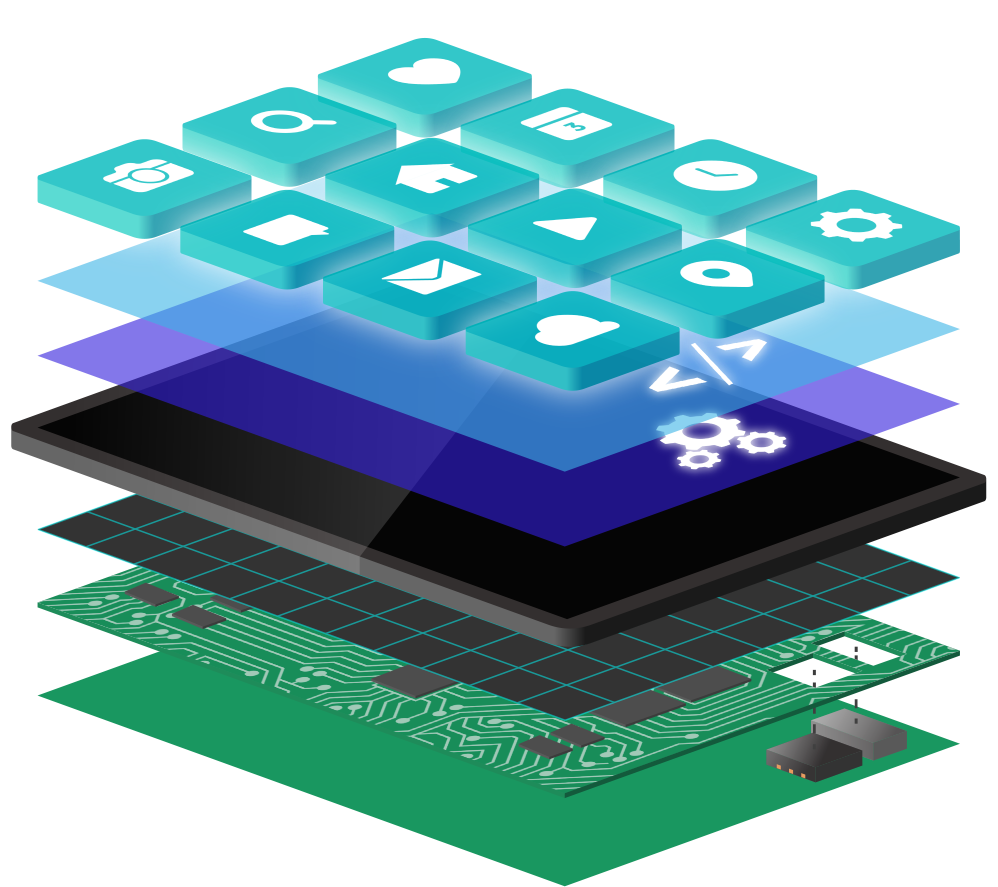
Create a high-end experience with a cost-effective and easy-to-integrate solution. TouchSense technology optimizes actuators and haptic driver ICs for better performance.
We will work with you to tune everything from vibration magnitude and duration to frequency and rhythm so that you can create a haptic experience that’s uniquely yours.
Smart Sensing System for Getting the Haptic Experience Just Right.
Active Sensing Technology takes haptics to the next level with motion sensing + smart control technology. Rapidly responding to the haptic system’s current state, Active Sensing Technology can realistically recreate button pushes, dial turns, and sliders. The technology gives device makers to deliver a fully interactive digital display with programmable touch surfaces.
Made for suspension mounting and whole device vibration, Active Sensing Technology can be used for automotive, mobile and IoT devices.
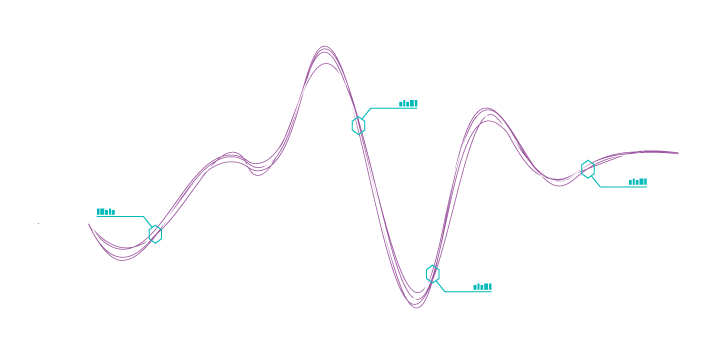
Calculates the system response every sub-millisecond to recalibrate actuator vibration.
A closed-loop system design that allows the haptic system to take advantage of the device’s sensor for signal strength and timing calculations.
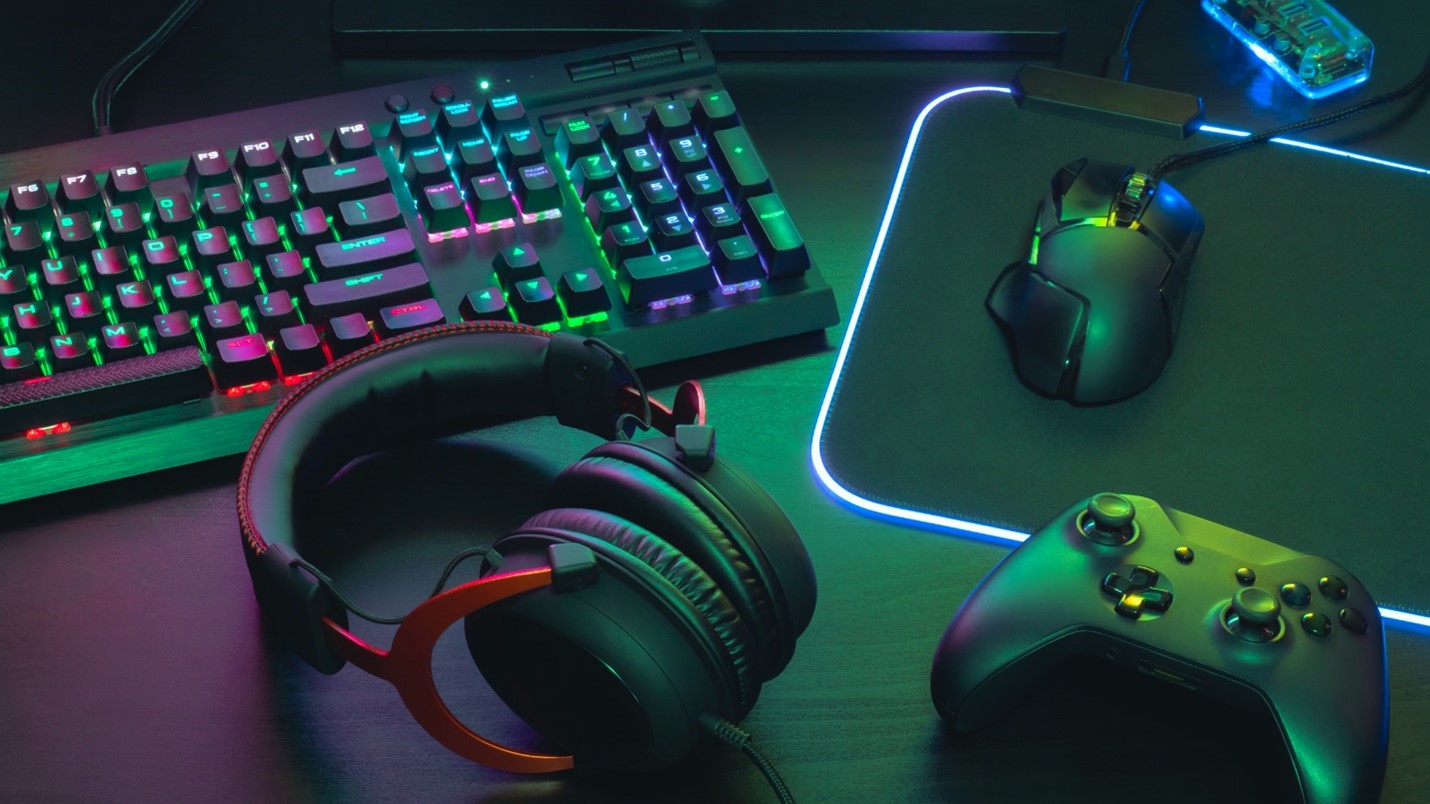
TouchSense Force brings immersive, high-definition haptics to a wide range of peripherals.
Building a high-performing haptic system requires expert knowledge and detailed insight on how each haptic component works. Let us help you create, design and implement the best haptic system for your experience.

Specify the haptic effect design in a prototype environment to select the exact button feel
Determine the range and magnitude of implementation based on specific hardware performance capabilities
Plan for the proper design process and criteria for system implementation
Learn about implementation for various touchscreens and touchpad installations
Choose the right haptic hardware for each installation
Understand the crucial role software plays in haptic effect control

We live and breathe haptics. We can help you optimize your hardware design, customize tactile effects, and quickly get your product to market.
Our experts are here to help every step of the way. We routinely assist customers with validating use cases, customizing tactile effects, and seamlessly integrating them into their content or product.
Our team works day and night to create new use cases, develop new technologies, and increase the value we provide to our customers. We’ve developed a comprehensive patent portfolio that spans a variety of markets and uses.